

Why starting hand charts are one of the fastest ways to cut down costly preflop mistakes
You can turn a large, confusing set of possible hole-card combinations into clear, consistent decisions by using starting hand charts. These charts summarize which two-card combinations are playable from each position at the table, removing guesswork and helping you avoid overplaying weak hands or folding too narrowly. When you follow a chart, you create a baseline strategy that makes both disciplined play and future adjustments easier.
Using charts doesn’t make you predictable if you understand their purpose: they establish a foundation. Once you learn to read and internalize them, you can focus mental energy on postflop play, reads, and exploiting opponents rather than re-evaluating basic preflop choices every hand.
What a starting hand chart actually shows and why every symbol matters
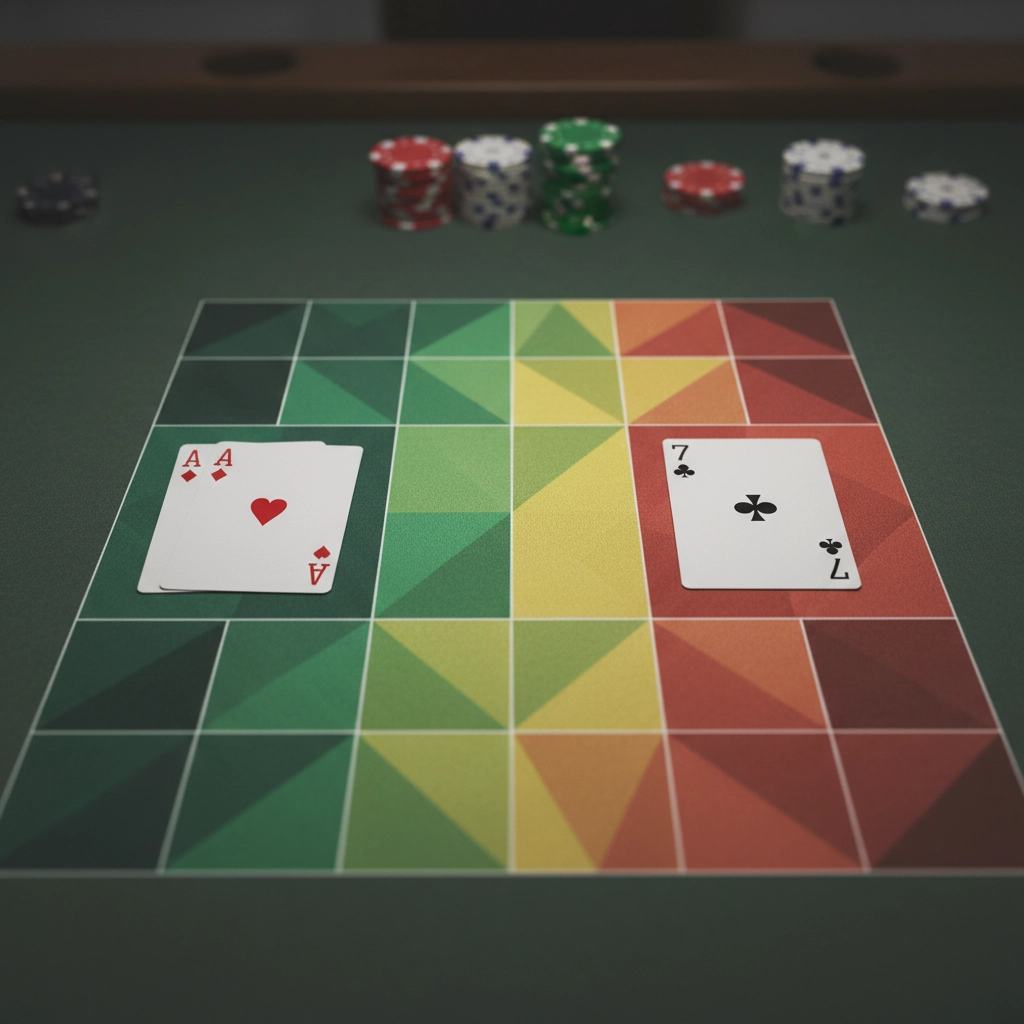
At first glance, a chart is just a grid of 169 possible hole-card combinations (pairs, suited, offsuit). But each cell communicates three practical things:
- Playability: Whether the hand is worth entering the pot from a given position.
- Action type: If the hand should be folded, called, opened with a raise, or 3-bet in advanced charts.
- Positional nuance: How your expected range tightens or widens from early to late seat.
When you learn to translate the graphical colors or letters on a chart into simple verbs—raise, call, fold—you reduce hesitation at the table and limit costly errors made under time pressure.
How to read a starting hand chart and apply it to your early game
Reading a chart is straightforward if you break it into small steps. First, identify your seat category (early, middle, late, small blind, big blind). Second, find the card combination on the grid. Third, follow the chart’s recommendation for that seat. Practice this sequence off-table until it becomes automatic.
Practical rules to use with most beginner or intermediate charts
- From early position, play tight: open mainly premium pairs and strong broadway cards (e.g., AA–99, AK, AQ).
- From middle position, add suited connectors and some weaker broadways to your raising range.
- From late position, widen your opening range significantly—steal blinds with hands that have fold equity and playability (e.g., suited Aces, suited connectors, and many broadways).
- In the blinds, be defensive: call or defend with hands that have reasonable equity against late-position steals, but fold marginal holdings against large raises.
Drill these patterns in low-stakes play and the charts will stop feeling restrictive and start feeling like an aid to consistent profitability.
Next, you’ll learn how to adjust those baseline charts for stack sizes, opponents’ tendencies, and specific table dynamics so your preflop choices become situation-aware rather than rigid.
How stack size changes the chart: short-stack vs deep-stack adjustments
One of the most important real-time edits you should make to any baseline chart is based on effective stack depth. A chart built for a 100bb cash game won’t be optimal at 20bb or 300bb. Make these straightforward modifications so your preflop decisions remain profitable rather than theoretical.
- Short stacks (≈10–25bb): shove/fold mentality. With shallow effective stacks, speculative hands lose value because you rarely get two streets to realize implied odds. Convert many marginal opens and calls into all-in shoves or folds (use a push/fold chart). Prioritize high-card strength and pairs: broadway combos and medium-to-large pairs become dominant, suited connectors and small pairs are folded most of the time.
- Medium stacks (≈25–60bb): widen value but limit deep speculative calls. You can open more hands than at 10bb because postflop play still matters, but avoid flat-calling large raises with hands that need multi-street play (like 54s) unless stack-to-pot ratios are favorable. Consider sizing up opens to generate fold equity and simplify postflop decisions.
- Deep stacks (≈100bb+): incorporate more speculative hands. When stacks are deep, suited connectors, small pairs, and suited one-gappers increase in value because you can win large multi-street pots. Expand your late-position opening range and defend the blinds more liberally—these hands have the implied odds to justify seeing flops.
Practical thresholds: use a push/fold chart under ~12bb; tighten and prefer shoves/calls 12–25bb; above ~40–50bb start reintroducing deeper-stack lines (limps, 3-bet bluffing, multi-street barrelling). Always think in terms of effective stacks, not absolute chips—what matters is the smallest stack involved in the pot.

Reading opponents and shifting ranges: simple exploitative edits
Charts describe a default range against an average table. The fastest way to turn that default into an edge is to identify opponent tendencies and apply a few clear adjustments.
- Against tight/passive players: widen your open-raise range, especially in late position. These players fold too much to pressure, so add suited Aces, suited broadways, and more two-gappers to your stealing range. Reduce bluff 3-bets—value extraction is more profitable.
- Against loose/calling players (“calling stations”): narrow your bluffing and increase value betting. Cut speculative hands that need to make disguised sets or straights unless you can get paid off postflop. Favor strong top-pair and pair-heavy ranges for isolation.
- Against aggressive/3-bet-heavy opponents: tighten your opening range, and 3-bet more for value with hands that dominate their opening range (AQ, JJ+). Include stronger 4-bet bluffs only if you have postflop plans; otherwise, fold marginal hands that fare poorly in 3-bet pots.
- Exploit frequent stealers: defend the blinds with wider ranges if they open excessively from late positions—use hands that have decent equity and play well postflop (Axs, broadway combos, suited connectors depending on stack depth).
Use simple stats or informal reads: if an opponent folds to steals >65–70%, steal more; if they 3-bet over 10–12% from position, tighten and set up counter 4-bets. The goal is not perfection—it’s making the chart adapt so you extract value from predictable errors.
Applying dynamic adjustments at the table: quick rules to use every hand
When you’re seated, don’t mentally rework your whole chart—apply a handful of lightning-fast checks before each decision:
- Check effective stacks (yours and the relevant opponents).
- Note opponent type to your left and right: tight/loose, passive/aggressive.
- Ask: “Is steal equity or implied odds more important here?” If steal equity, widen; if implied odds, require deeper stacks.
- Adjust sizing: larger opens vs calling-heavy tables, smaller opens vs tight tables to increase fold equity.
- Keep a default fallback: if uncertain, revert to the baseline chart for that position and stack depth—consistency beats heroics.
These micro-rules keep your preflop play fluid and situation-aware while preserving the chart’s core benefit: removing hesitation and preventing costly preflop mistakes.
As you start using charts in real sessions, combine them with short drills: preflop flashcards, timed decision drills, and hand-history review focused on preflop errors. The goal is to make the chart your default reflex so you can free up mental bandwidth for reads, postflop planning, and exploiting opponents.
Putting the chart to work
Treat a starting hand chart as a training tool, not a crutch. Use it to build consistency, then layer in the adjustments described here—stack-aware edits, opponent-based tweaks, and quick on-table checks—until those edits become automatic. Track a few simple metrics (open-raise frequency, fold-to-steal, 3-bet rate) and iterate: small measured changes beat one-off hero plays. For additional practice resources and downloadable charts, see starting hand charts and drills.
Frequently Asked Questions
Do I have to follow a starting hand chart exactly at the table?
No. Charts provide a baseline to reduce mistakes and hesitation. You should follow them until you can quickly recognize spots, then deviate based on stack sizes, opponent tendencies, and table dynamics. The chart is your default; adjustments make it profitable.
Which chart should I use for tournaments versus cash games?
Use charts tuned to effective stacks. For tournaments with many short-stack spots, consult push/fold charts under ~12bb and tighten/shove ranges in the 12–25bb zone. For cash games with deeper stacks (100bb+), use charts that include more speculative hands and wider late-position opens.
How do I know when to widen or tighten my opening range against specific opponents?
Rely on simple signals: widen against opponents who fold to steals >65–70% or who play too passively; tighten against frequent 3-betters or overly aggressive players. Adjustments should be small and data-driven—track tendencies and react when clear patterns emerge rather than on a single hand.