
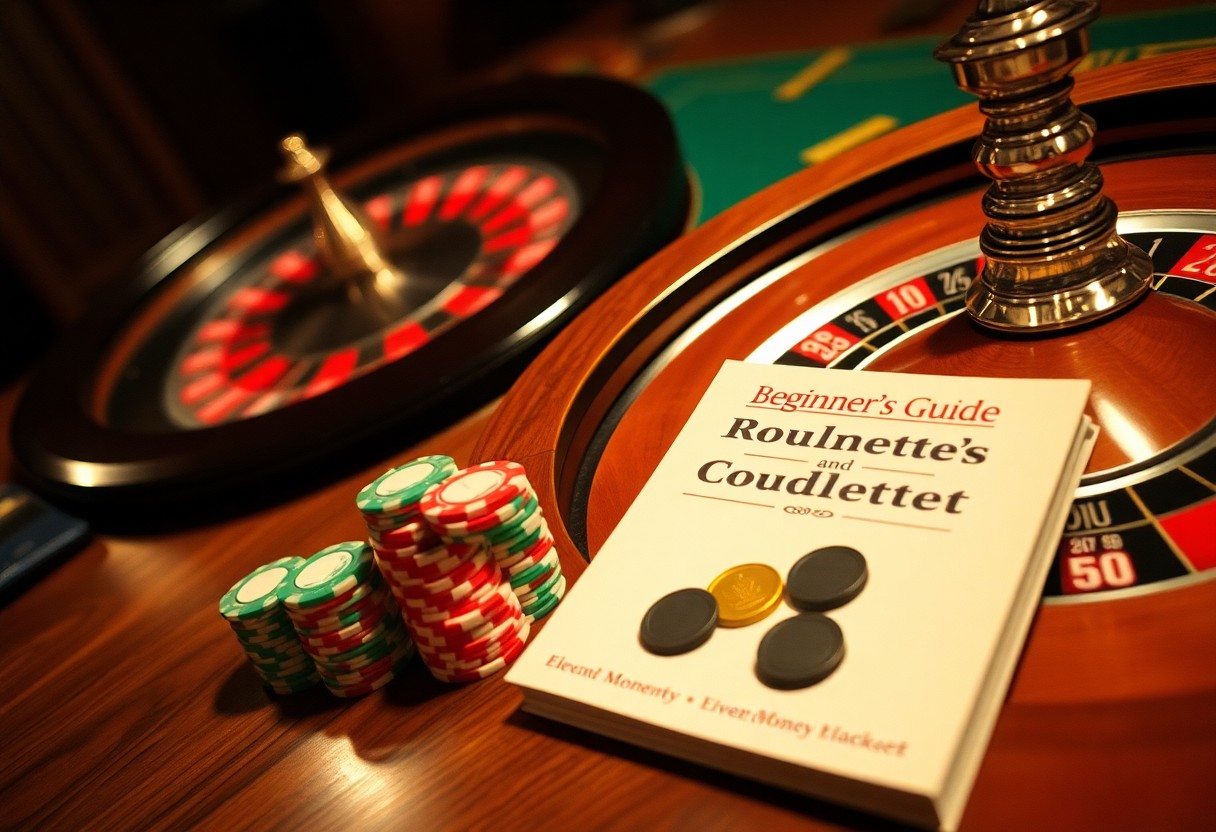
Strategies for new players focus on bankroll management, table selection and disciplined bet sizing to reduce risk; learn when to use outside bets for steadier returns, why the house edge is the main danger, and how simple systems like flat betting can improve longevity without guaranteeing wins-this guide gives practical, tested advice to play smarter and protect your money while enjoying the game.
Types of Roulette
Wheels vary by pocket count and rule set, directly affecting win probability and bankroll planning: American uses a double-zero, European a single zero, and French adds rules like la partage or en prison. Numerical differences matter – roughly 5.26% house edge for American, 2.70% for European, and as low as 1.35% on French even-money bets. Assume that these changes shift expected loss and which strategies are viable.
- American Roulette
- European Roulette
- French Roulette
- House Edge
- La Partage / En Prison
| Variant | Quick facts |
| American | 38 pockets (0, 00) → house edge ≈ 5.26% |
| European | 37 pockets (single 0) → house edge ≈ 2.70% |
| French | Single 0 plus La Partage/En Prison → effective even-money edge ≈ 1.35% |
| Impact | Lower zeros reduce expected loss and improve performance of flat/unit strategies |
American Roulette
American wheels feature 38 pockets with both 0 and 00, producing a house edge around 5.26%. Straight-up pays 35:1 but true odds are 1/38 (≈2.63%), so expected loss on a $100 straight is about $5.26; outside bets carry the same edge. High variance and the extra zero make progressive systems riskier and bankroll demands substantially larger.
European Roulette
European uses a single 0 across 37 pockets, lowering the house edge to roughly 2.70%. A $100 straight bet has expected loss ≈ $2.70, so even-money staking plans lose less over time compared to American tables. Many players choose European for the better long-term math and reduced variance versus double-zero games.
Probability for a single number is 1/37 (≈2.70%), so a 35:1 payout underpays relative to true odds; expected value explains casino profit. Sector and neighbor bets appear in live-wheel formats, and while historical rotor-bias exploits existed, modern manufacturing makes lasting mechanical bias rare.
French Roulette
French wheels match European layout but commonly apply La Partage or En Prison to even-money bets, cutting effective house edge to about 1.35%. That rule change significantly improves player expectancy on outside bets, making flat-betting or conservative progression strategies materially more attractive than at standard European tables.
Under La Partage half of an even-money stake is returned when zero lands; under En Prison the stake is held for the next spin and released only if it wins. For instance, a $100 even bet faces an expected loss of roughly $1.35 per spin with these rules, versus $2.70 without them.
Step-by-Step Guide to Playing Roulette
| Step | What to do |
|---|---|
| 1. Choose a wheel | Select European (37 pockets, 2.7% house edge) or American (38 pockets, 5.26% house edge). |
| 2. Place bets | Pick inside bets (straight 35:1, split 17:1) or outside bets (red/black 1:1, dozen 2:1) based on risk appetite. |
| 3. Spin & settle | Dealer spins, announces “no more bets,” ball lands, then payouts and losses are applied according to table rules. |
Understanding the Roulette Wheel
European wheels have 37 pockets (0-36) and a house edge of about 2.7%; American wheels add a 00 for 38 pockets and a house edge of 5.26%. Colors alternate red/black while zeros are green, affecting even-money bets. A single-number straight bet on a European wheel hits with probability about 1/37 (~2.7%)</strong) and pays 35:1, which illustrates how payouts and probabilities diverge.
Placing Your Bets
Inside bets target specific numbers or small groups (straight 35:1, split 17:1, street 11:1) while outside bets cover larger sets (dozens 2:1, red/black 1:1). Placing €5 on red yields a 1:1 payout if it wins; placing €5 on one number returns 35:1 but has roughly a 2.7% chance on European wheels. Choose bets that match your bankroll and tolerance for variance.
More detail: combine bets to balance hit frequency and payout – for example, two dozen bets plus a split covers 24 numbers while preserving a chance at a higher payout; a six-line covers 6 numbers and pays 5:1. Use bankroll rules like risking no more than 1-2% of your roll per spin to manage drawdowns. Note that probability differences mean expected value stays negative regardless of bet selection.
Knowing the Rules
Tables enforce limits (e.g., €1 minimum, €500 maximum) and specific rules like “no more bets” after the spin. Some European tables offer la partage or en prison on even-money bets, returning half or holding the bet when zero hits and reducing the house edge to about 1.35%. Online casinos may apply different settlement timing and bet acceptance rules.
More detail: when zero (or 00) appears, payout resolution depends on the table rule-without la partage/en prison, even-money bets lose; with la partage you lose half, with en prison the bet can be held for the next spin. Also, called or announced bets at live tables follow dealer conventions and may have different minimums; always check the posted table rules to avoid unexpected losses.
Effective Tips for Beginners
Adopt simple, low-variance plays: focus on outside bets and consistent flat betting to stretch sessions. Single-zero European roulette carries a 2.7% house edge versus ~5.26% on American wheels, so choose casinos and tables accordingly. Set session limits and use unit sizes that equal about 0.5-2% of your total stake to control swings. Perceiving variance as part of the game keeps decisions rational.
- Use bankroll management: preset session bankrolls, stop-loss, and win targets.
- Prefer outside bets for lower volatility (red/black, odd/even).
- Choose European roulette over American to cut house edge to 2.7%.
- Practice flat betting and avoid ramping bets after losses.
Bankroll Management
Divide your total funds into session bankrolls and set a stop-loss and win target-e.g., with $1,000 use $50 sessions and bets of $1-$5 (0.1-0.5% per spin). Use fixed unit sizes and avoid increasing units after losses; that chasing multiplies risk quickly. Log outcomes and reassess unit size after 10-20 sessions to stay aligned with results, and treat bankroll management as the method that preserves playtime and capital.
Choosing the Right Table
Prefer single-zero European roulette to lower the house edge to 2.7% and check table limits so minimums let you place at least 20-50 units per session; avoid American double-zero wheels (5.26%). Observe dealer pace and player crowding-faster spins raise variance, crowded tables slow play-and confirm rules like en prison or la partage when available. Choosing the right table aligns limits, rules, and pace with your strategy.
Smaller minimums suit micro-bankrolls: with $200 choose $1-$2 minimums so you can survive downswing, while larger bankrolls may benefit from comp structures at higher-limit tables. Seek tables offering en prison or la partage-these can halve the effective house edge on even-money bets to about 1.35%. In casinos, watch for consistent wheel behavior as a rare bias signal; online, prefer audited RNG tables and transparent RTP reports to ensure fairness.
Factors Influencing the Game
Wheel type, payout structure, and player behavior change outcomes quickly: a European single-zero wheel gives a 2.70% house edge while an American double-zero wheel jumps to 5.26%; table minimums and maximums determine which bet progressions are feasible, and detectable wheel bias or predictable payout spreads can tilt short-term edges. Professionals compare these variables across casinos and sessions. This shifts which bets and strategies are viable at different venues.
- House edge
- Table limits
- Wheel bias
- Betting patterns
- Payouts
House Edge
Single-zero roulette carries a 2.70% edge, double-zero about 5.26%; that means if you bet $1 per spin for 100 spins the expected loss is roughly $2.70 (European) versus $5.26 (American). Short-term variance can mask this, but over thousands of spins the math dictates expected loss proportional to total wagered volume and the wheel type.
Table Limits
Minimums and maximums vary widely: online tables often start at $0.10-$1 with maximums around $500-$2,000, while live high-roller rooms may permit $10,000+. Low maximums prevent long progressive sequences and force adjustments to strategy and bankroll sizing.
Use the formula floor(log2(max/min)) to estimate survivable Martingale doubles: for a $1 minimum and $500 maximum you get up to 8 doublings (2^8 = 256) before the next bet (512) breaches the cap, so table caps directly limit progressive systems and increase the likelihood of forced, large losses.
Simple Strategies That Work
These low-complexity systems focus on bankroll control and variance management rather than beating the wheel; the house edge remains 2.70% on European and 5.26% on American wheels. Short sessions using unit-based plans, table limits and clear stop-loss/profit targets can turn playability into consistent small wins, but extended play or ignoring limits invites rapid losses from rare streaks.
Martingale System
Start with an even-money bet (for example $10) and double after each loss so a single win recovers all prior losses plus one unit; after six losses the next bet would be $640 with total exposure of $630. It can work for brief runs, yet is dangerous because table limits and finite bankrolls quickly prevent recovery, leaving players exposed to large abrupt losses despite short-term wins.
D’Alembert Strategy
Increase your stake by one unit after a loss and decrease by one after a win; with a $10 unit a 1-2-3 sequence costs $60 over three losses, making it less aggressive than Martingale and reducing peak volatility. It moderates swings but does not change the underlying house edge, so expected value remains negative over many spins.
If your base unit is $10, ten consecutive losses on D’Alembert sum to 55 units = $550 total exposure, far smaller than the Martingale equivalent. Empirical results show D’Alembert lowers peak drawdowns but still yields an average loss of about $27 per $1,000 wagered on a European wheel; cap progressions and strict stop rules to limit the slow erosion of bankroll.
Pros and Cons of Playing Roulette
| Pros | Cons |
|---|---|
| Simple rules and quick learning curve for new players | House edge: European 2.7%, American 5.26% |
| Fast pace-live tables can do roughly 60-80 spins/hour | High variance causes large bankroll swings |
| Low minimum bets (often $0.10) suit tight bankrolls | Table limits and bankroll caps defeat progressive systems |
| Wide bet range; straight-up pays 35:1 | Long losing streaks can quickly erase wins |
| Multiple bet types allow varied strategies (inside vs outside) | No long-term skill advantage over the house |
| Both casual and high-roller play supported | Fast play increases potential for problem gambling |
| Online variants offer RNG and live-dealer formats | Unlicensed sites present fairness and payout risks |
Advantages of Roulette
Rules are concise and bets range from simple red/black to single-number shots paying 35:1, so players can choose volatility. European wheels carry a relatively low house edge of 2.7%, many casinos let you play from $0.10 up, and the game’s quick rounds (about 60-80 spins per hour live) make it ideal for both short sessions and structured bankroll strategies.
Disadvantages of Roulette
The house edge is immutable-switching tables doesn’t change expected loss over time, and the American double-zero wheel raises that edge to 5.26%. Volatility is high, so even modest sessions can see sharp downswings, and progressive betting systems carry significant bust risk.
For example, a Martingale starting at $5 doubles after each loss: six consecutive losses require the next stake of $320 and total exposure of $315. On European roulette the chance of six straight losses on an even-money bet is about 1.85%, small but meaningful-table limits or a limited bankroll can force large, unrecoverable defeats despite short-term wins.
To wrap up
Following this “Beginner’s Guide To Roulette – Simple Strategies That Actually Work”, novice players gain a clear, disciplined approach to roulette, focusing on bankroll management, low-risk bets, and realistic expectations; these simple, tested strategies improve decision-making and reduce losses while highlighting probabilities and house edge so play remains informed and strategic.
FAQ
Q: What simple strategies should a beginner use to play roulette responsibly and effectively?
A: Start with a clear bankroll and divide it into session units (for example, 1-2% of your bankroll per spin). Favor outside bets (red/black, odd/even, high/low) to reduce volatility and aim for steady, small wins instead of chasing big payouts. Use flat betting (same stake each spin) or a mild positive progression like Paroli (increase after wins, reset after a loss) to control risk. Prefer European wheels (single zero) over American wheels (double zero) when available because the house edge is lower. Set strict stop-loss and take-profit limits for each session and practice on free-play tables before wagering real money.
Q: Is the Martingale system a reliable way to guarantee profit?
A: Martingale doubles your bet after every loss so one win recovers prior losses plus a profit equal to the original stake, but it requires an unlimited bankroll and no table limits-neither of which exist. Real-world constraints mean a long losing streak can wipe out a bankroll or hit the table limit before recovery, producing large losses. Mathematically the expected value remains negative due to the house edge, so Martingale increases short-term risk without changing long-term outcomes. Safer alternatives include flat betting, small positive progressions (Paroli), or setting strict loss caps.
Q: How should odds, payout structure, and house edge influence which bets I place?
A: Understand that different bets trade probability for payout: straight-up numbers pay 35:1 but hit infrequently; even-money bets pay 1:1 and win almost half the time (slightly below 50% after accounting for zero). The house edge is about 2.70% on European wheels and 5.26% on American wheels-this affects long-term losses but not short-term variance. If your goal is longer play with smaller swings, choose outside bets and smaller stakes. If you seek big payouts and accept high variance, use inside bets with small, controlled stakes. Always size bets relative to your bankroll and session goals to manage risk.