
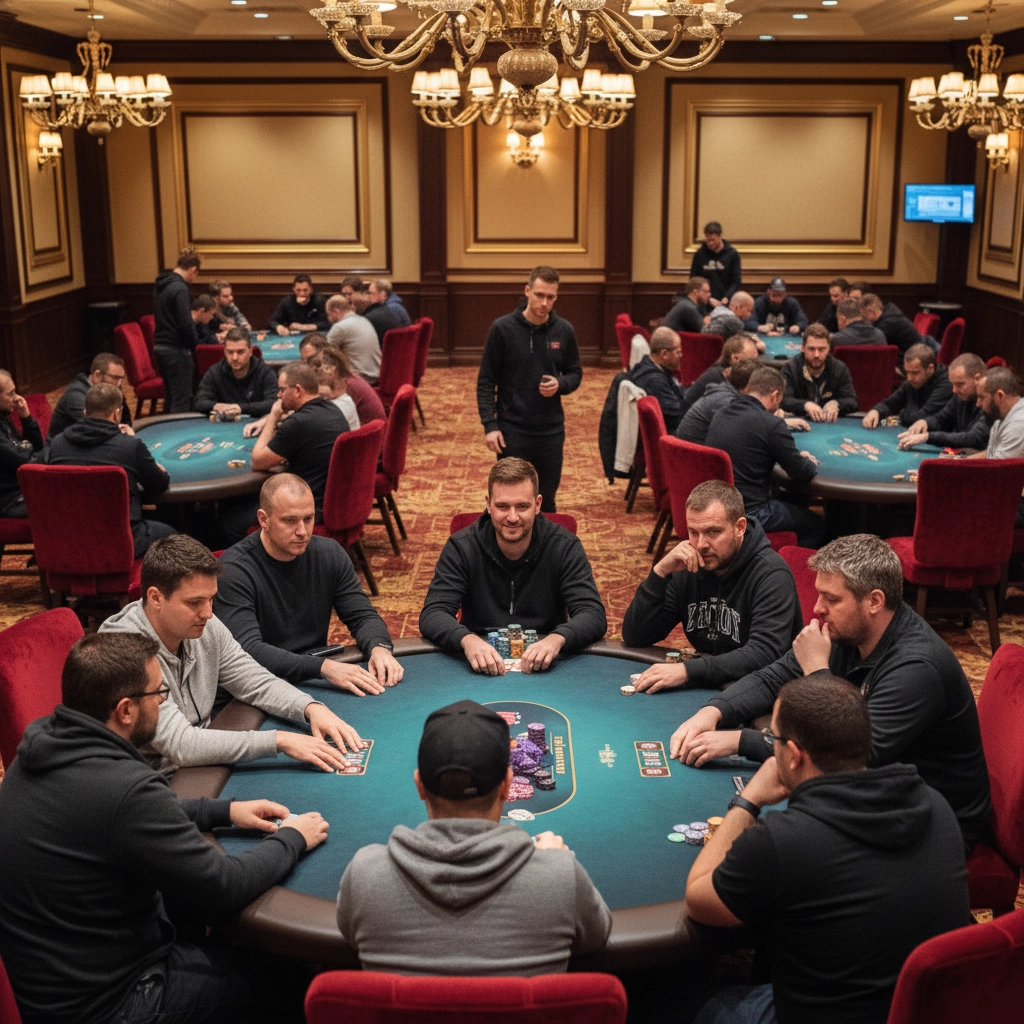
Read the Table: Why Table Selection Shapes Your Edge
Before you even touch a chip, the table you pick determines a large portion of your expected value. You’ll gain more by seating yourself where opponents make consistent mistakes, where stack depths favor your preferred strategies, and where position opportunities are frequent. Effective table selection is not luck — it’s pattern recognition and discipline.
What to look for when scouting a table
- Player tendencies: Identify loose-passive, tight-aggressive, and calling-station profiles. You’ll want to avoid too many volatile maniacs if you can’t comfortably exploit them, and prefer tables with misplays you can exploit.
- Stack depth distribution: Short stacks (<40bb), medium (40–80bb), and deep stacks (>80bb) change which hands are profitable and how you size bets.
- Position availability: A table with a lot of unknowns in early positions or frequent limp-heavy play offers more steal and isolation opportunities from the cutoff and button.
- Win-rate signals: Observe recent pots for large showdowns or consistent folding patterns — these are immediate indicators of exploitable behavior.
When you sit, spend the first 30–60 hands observing with a proactive mindset. Note who over-folds to raises, who floats too much on the flop, and who rarely 3-bets. Your seating choice should maximize hands where your skill edge matters most.
Adaptive Bet Sizing: Principles That Keep You Profitable
Bet sizing is a communication tool — you convey strength, manipulate pot odds, and control ranges. You must adapt universal principles to the table context you chose above. A one-size-fits-all bet size will leak chips quickly against observant opponents.
Core bet-sizing rules to apply immediately
- Preflop sizing: Open-raise larger versus loose callers (3.5–5bb) and smaller at tighter tables (2.2–2.7bb). Increase sizing in deeper-stack games where postflop play matters most.
- Continuation bets: Size c-bets to the texture and opponent. Use smaller c-bets (25–40% pot) on dry flops to target folds; use larger c-bets (45–70% pot) when you need fold equity against sticky, medium-stack opponents.
- Value betting: Extract with size tailored to opponent tendencies — bet smaller into calling stations, larger versus players who fold too much to river pressure.
- Protection vs. induction: Protect vulnerable hands with larger bets when multiple draws exist; induce bluffs with smaller bets when opponents are opportunistic and likely to overbluff.
Two practical habits to develop: always ask yourself who is facing your bet and why they will continue, fold, or raise; and be willing to deviate from textbook sizes when table conditions warrant it. Your bet sizing should be a conversational response to the specific player mix and stack depths you observed.
Next, you’ll learn concrete bet-sizing ranges for common stack depths and sample table-selection checklists you can use every session to maximize immediate profitability.

Bet-sizing by Stack Depth: Practical Ranges and Examples
Stack depth is the single-most important variable after player tendencies. Below are pragmatic sizing ranges you can adopt immediately; treat them as default rails you can deviate from when table dynamics demand it.
- Short stacks (<40bb): Preflop open to 2.2–2.7bb is fine; three-bets should be compact (6–9bb) since shove frequency is high. Postflop, make larger relative bets to deny effective pot odds to draws — target 60–100% pot when you want to end the hand, and 30–50% when inducing with a range advantage. On rivers, favor polar-sized bets (60–100%) when value or bluff-shove is viable.
- Medium stacks (40–80bb): Open-raises often 2.5–3.5bb depending on table looseness. In heads-up pots, c-bet 35–50% on dry boards and 45–65% on wet boards when you need fold equity. Turn sizing should generally escalate from flop: if you used 35% on the flop, 50–70% on the turn is logical to protect and charge draws. In multiway pots, keep bets smaller (25–40%) unless you need to deny a completed draw.
- Deep stacks (>80bb): Preflop sizing increases to 3.5–5bb to build a pot when you have implied odds hands. Postflop play emphasizes pot control and maneuvering — c-bets in the 25–45% range work well as you can play larger turn/river lines. In multi-street battles, use staggered sizing: smaller flop, medium turn (40–60%), larger river (50–80%) to extract or polarize. Beware overcommitting; deep-stack games reward nuanced sizing and positional aggression.
Example: In a 100bb game you open to 4bb from the button, face a call on the big blind and see K♠7♣2♦. A 30% c-bet (~3bb) keeps the pot manageable and sets up a 50–60% turn shove or continued pressure if the turn bricks. In a 40bb game, the correct c-bet would be larger (~60%+) to deny free cards and shorten the hand.
A Repeatable Table-Selection Checklist You Can Use Every Session
Turn table selection into a simple routine. Before you sit and during the first hour, run this checklist like a surgeon’s pre-op list.
- Quick scan (0–5 hands): Count users who frequently limp, who open huge, and who rarely show down. Note stack distributions.
- Observe (5–30 hands): Identify one or two clear leak types (over-folders, over-callers, over-bluffers). Note how often players fold to steals from the cutoff/button.
- Position map: Sit to the left of the most exploitable player (so you act after them). Avoid seats directly to the right of aggressive 3-bettors unless you can defend profitably.
- Rake and buy-in fit: Make sure your intended buy-in matches game dynamics — deep-stack players need deeper buy-ins to realize edge; shallow games compress strategies.
- Decision window (30–60 hands): If you haven’t found at least one consistent exploitable tendency or your expected win-rate is negative vs the table composure, move. Don’t hesitate to change tables within the first hour.

When to Shift Strategies Mid-Session
Good table selection is dynamic. Recognize triggers that demand a strategy shift and have a plan for each.
- New player arrives: If a fresh reg sits and is heads-up aggressive, tighten and re-evaluate three-bet ranges; if a calling station arrives, expand value-betting.
- Stack shifts: When several players reload deep, widen suited connectors and implied-odds plays; if stacks shorten, move to protection-oriented sizing and shove/fold strategies.
- Perceived adjustments: If opponents start defending more, increase bet sizes for value and polarize rivers; if they fold more, ramp up steals and isolation raises.
- Table heat: If variance spikes (many large pots), reduce volatility by tightening marginal spots and preserving bankroll.
Putting the Plan into Play
The difference between knowledge and profit is consistent execution. Pick one or two adjustments — a preflop sizing change, a tighter seating habit, or a plan for shifting when stacks change — and make those your focus for the next several sessions. Track outcomes, review hands that deviate from your plan, and iterate. Over time small, deliberate improvements compound into a meaningful edge at cash tables. For additional community discussion and hand-analysis resources, consider visiting the TwoPlusTwo forums.
Frequently Asked Questions
How long should I sit and observe a table before committing to play?
Use an initial decision window of roughly 30–60 hands (or about the first hour). During that time, catalog obvious leak types, stack distributions, and positional opportunities. If you can’t identify at least one exploitable tendency or the table doesn’t fit your buy-in/strategy within that window, move.
Do I size bets primarily by stack depth or by opponent tendencies?
Both matter, but opponent tendencies usually take priority. Stack depth determines which ranges and lines are feasible, while tendencies tell you how to size to extract or fold out. Make stack-depth defaults your baseline and then tweak sizes to exploit how specific players react.
What’s the safest way to practice adaptive sizing without risking too much bankroll?
Practice at lower stakes or shorter sessions focused on a single variable (e.g., only adjusting preflop sizes or only c-bet sizing). Use a hand-tracker to tag hands you want to review, and study those off-table. Simulations, solver outputs, and controlled bankroll limits let you learn rapidly with minimal risk.