
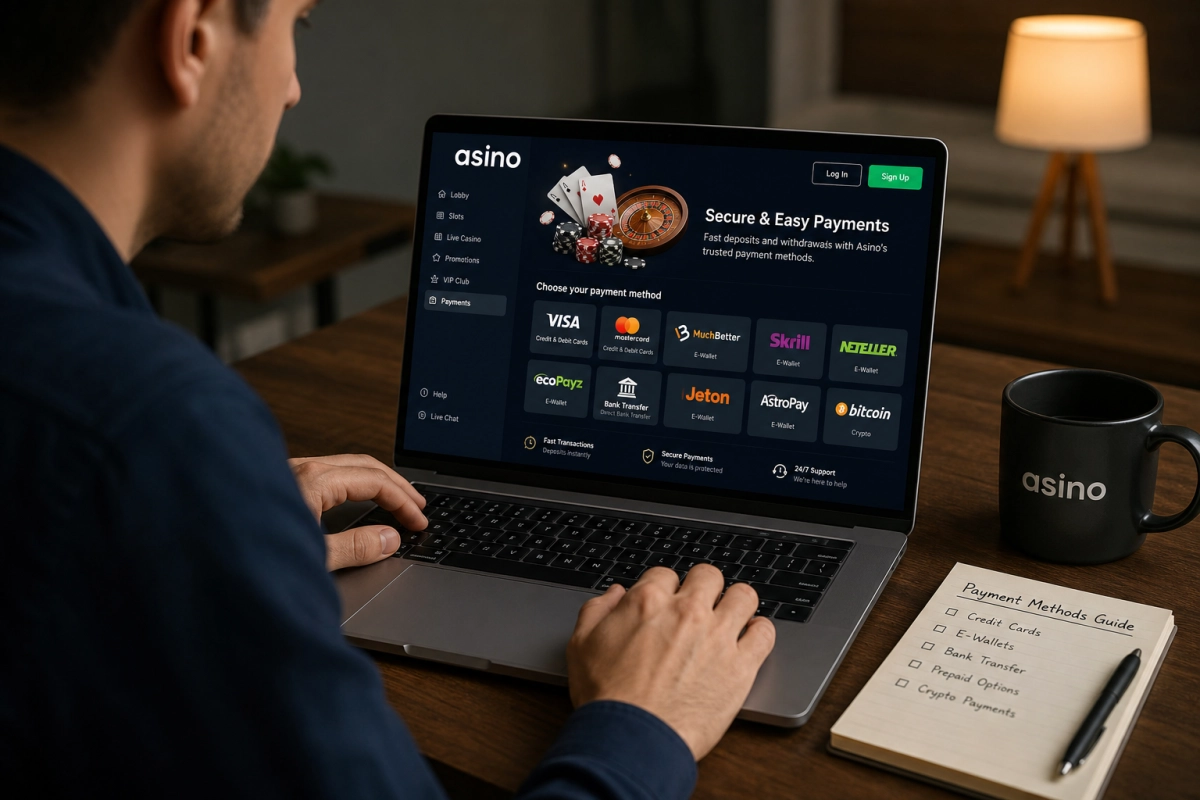
How asino payment methods work and what this guide covers
This guide explains the most common online casino payment methods and how they affect deposits, withdrawals, processing times, fees, verification, wagering requirements, security, and mobile compatibility. Readers will learn what to expect when funding an account or requesting a payout, how each method interacts with bonus terms and wagering, and practical tips for choosing the best option for play style and privacy. The primary goal is to make payment choices clearer whether someone is new to real money casino play or comparing options at multiple operators.
Key factors to compare across casino payment methods
Before examining individual methods, it helps to know the key attributes that distinguish them. These are the practical points players should compare when choosing a deposit or withdrawal method.
- Deposit and withdrawal process: Whether funds are instant or require manual approval, and whether withdrawals go back to the original source.
- Processing times: Typical time from request to funds in your account, including weekends and identity checks.
- Fees and limits: Any percentage or fixed fees, and minimum/maximum deposit and withdrawal amounts.
- Verification steps: Documents and checks required to verify identity and payment ownership.
- Wagering requirement interaction: How a method affects bonus eligibility and the ability to withdraw bonus-related funds.
- Security and privacy: Encryption, third-party intermediaries, and whether personal bank details are shared with the casino.
- Mobile compatibility: Ease of use with mobile apps and mobile-optimized casino sites.
Card payments (credit & debit): deposits, withdrawals, and limits
Credit and debit cards remain among the most familiar asino payment methods. Deposits are typically instant: players enter card details and funds appear immediately in the casino account. Withdrawals, however, are slower because many casinos refund to the original card only after identity and source-of-funds checks.
- Processing times: Deposits: instant. Withdrawals: 2–7 business days typical, sometimes longer for international cards.
- Fees: Casinos often absorb deposit fees; some may charge or pass on fees for international transactions or currency conversion.
- Limits: Cards often have reasonable maximums per transaction and per day; banks may impose additional limits.
- Verification: Expect ID documents, proof of address, and sometimes a copy of the card (with middle digits masked) to confirm ownership.
- Wagering and bonuses: Some operators restrict bonuses for card deposits or exclude card payouts from instant bonus cashouts until wagering is met—always check bonus T&Cs.
- Security & mobile: Card transactions use standard encryption and are widely supported on mobile casino apps, though sharing card details increases exposure compared with intermediary methods.
E-wallets: speed, privacy, and when they make sense
E-wallets (PayPal, Skrill, Neteller and similar services) act as intermediaries between a player’s bank/card and the casino. They offer fast deposits and often the quickest withdrawals, with extra privacy because casinos do not see full bank details.
- Processing times: Deposits: instant. Withdrawals: often 0–24 hours after the casino processes the request.
- Fees: Wallet providers may charge for currency conversion or sending/receiving funds; casinos sometimes charge withdrawal fees for e-wallets.
- Verification: E-wallet accounts usually need identity verification when opened; casinos may request proof that the wallet belongs to the player.
- Wagering and bonuses: Some casinos exclude e-wallet deposits from specific bonus offers or require higher wagering—check bonus rules before depositing.
- Security & mobile: Two-factor authentication and token-based logins increase security, and most e-wallets offer polished mobile apps for quick transfers.
Part 2 will examine bank transfers, prepaid options, cryptocurrencies, deeper details on verification and responsible-use tips, and guidance on selecting the best payment method for different player needs.
Bank transfers and instant bank-pay services: rails and reliability
Bank transfers cover traditional wire transfers and newer instant bank-pay services (Trustly, Sofort, iDEAL, etc.) that route payments directly from your bank account. They’re solid when you want traceable, regulated payment rails and generally higher deposit/withdrawal limits.
- Processing times: Traditional wires: 1–5 business days (international longer). Instant bank-pay services: typically immediate for deposits; withdrawals are often processed back to your bank within 1–3 business days after casino approval.
- Fees: Banks may charge outgoing wire fees; casinos sometimes cover incoming deposits but may charge for withdrawals or currency conversion.
- Limits: Higher daily/monthly limits are common, making bank transfers suitable for higher-stakes players.
- Verification: Casinos will usually require a recent bank statement or screenshot to prove ownership of the account. Source-of-funds queries are more common for larger transfers.
- Wagering and bonuses: Bank transfers are typically accepted for bonuses, but some operators may apply specific terms—always check whether the deposit method is eligible for an offer.
- Security & mobile: Bank-pay services use your bank’s authentication, avoiding card entry on the casino site. They’re usually well supported on mobile via bank apps or mobile-optimized flows.
Prepaid cards and vouchers: quick deposits, limited withdrawals
Prepaid options include vouchers (Paysafecard), reloadable prepaid cards, or one-time voucher codes. They’re attractive for budget control and for players who don’t want to share bank/card details online.
- Processing times: Deposits: instant. Withdrawals: generally not possible directly to vouchers—casinos will require an alternate payout method such as bank transfer or e-wallet.
- Fees: Purchase fees for vouchers or card top-ups may apply, and currency conversion charges can occur when using prepaid cards internationally.
- Limits: Vouchers often have low per-voucher limits; you can combine multiple vouchers but daily limits may still apply.
- Verification: Although deposits can be anonymous, withdrawals trigger identity checks; expect ID and proof-of-address and the requirement to switch to a verifiable payout option.
- Wagering and bonuses: Some bonuses exclude prepaid deposits—check terms. Because withdrawals can’t usually return to the same voucher, bonus-related cashouts often require additional verification steps.
- Security & mobile: Vouchers and prepaid cards are easy to use from mobile but treat codes like cash—if lost, they’re usually irrecoverable.
Cryptocurrencies, verification nuances, and choosing the right method
Cryptocurrencies (Bitcoin, Ethereum, stablecoins and others) offer speed and pseudonymity, but they come with volatility and regulatory complexity.
- Processing times: On-chain deposits can complete in minutes to an hour depending on network congestion; withdrawals are similarly fast once processed by the casino, though some operators batch payouts.
- Fees and conversion: Expect network (miner) fees plus possible casino conversion fees if you opt to cash out in fiat. Stablecoins reduce volatility risk if you want crypto speed without price swings.
- Verification & AML: Many regulated casinos still require KYC even for crypto users—ID, proof of address and sometimes proof of crypto ownership. Privacy coins may be restricted due to AML rules.
- Wagering and bonuses: Crypto-specific promotions are common, but wagering may be calculated in fiat equivalents and bonus terms can vary sharply—read T&Cs carefully.
- Security & mobile: Use reputable wallets, check addresses and networks (don’t send ETH tokens to a BTC address), enable hardware wallets for large holdings, and use mobile wallet apps with caution around backups and seed phrases.
- Choosing the right method: Consider speed needs, privacy preferences, typical stake size, and willingness to undergo verification. E-wallets and crypto suit fast withdrawals and privacy; cards and bank transfers are reliable for bonuses and higher limits; prepaid is best for strict budgeting. Always match the payment option to how you’ll cash out and the casino’s T&Cs to avoid delays.
Practical checklist before you deposit
- Confirm the casino’s licensing and the specific payment methods accepted for both deposits and withdrawals.
- Read bonus terms to ensure your chosen deposit method doesn’t invalidate offers or add extra wagering requirements.
- Check processing times, fees, and limits so you won’t be surprised when cashing out.
- Prepare verification documents in advance (ID, proof of address, proof of payment) to speed up withdrawals.
- Enable security features like two-factor authentication on wallets and casino accounts.
- Decide whether privacy, speed, or low fees is your priority and pick a method that matches that priority.
- Set personal deposit and loss limits through the casino or via your bank/payment provider for safer play.
Troubleshooting common payment issues
- If a deposit is pending or rejected, check error messages, confirm card/wallet limits, and retry with a different method if needed.
- For delayed withdrawals, verify that KYC is complete and contact casino support with transaction IDs and timestamps.
- If funds return to an unexpected account, keep screenshots and communicate promptly with both the casino and your payment provider or bank.
- When currency conversion or unexpected fees appear, ask the casino for a breakdown and compare provider exchange rates before future transactions.
- Escalate unresolved disputes through the casino’s complaints procedure or the jurisdictional gambling regulator if necessary.
Putting payment choices into practice
Choose payment methods with intention: match the method to how you plan to deposit and withdraw, protect your identity and account with best-practice security, and keep clear records of transactions and communications. Remember that the fastest or most private option isn’t always the best fit for every situation—read terms, plan for verification, and use limits to manage risk. When issues arise, documented evidence and calm, timely communication with support teams usually resolve most problems. Above all, prioritize secure, responsible play and pick the payment setup that helps you stick to that approach.