
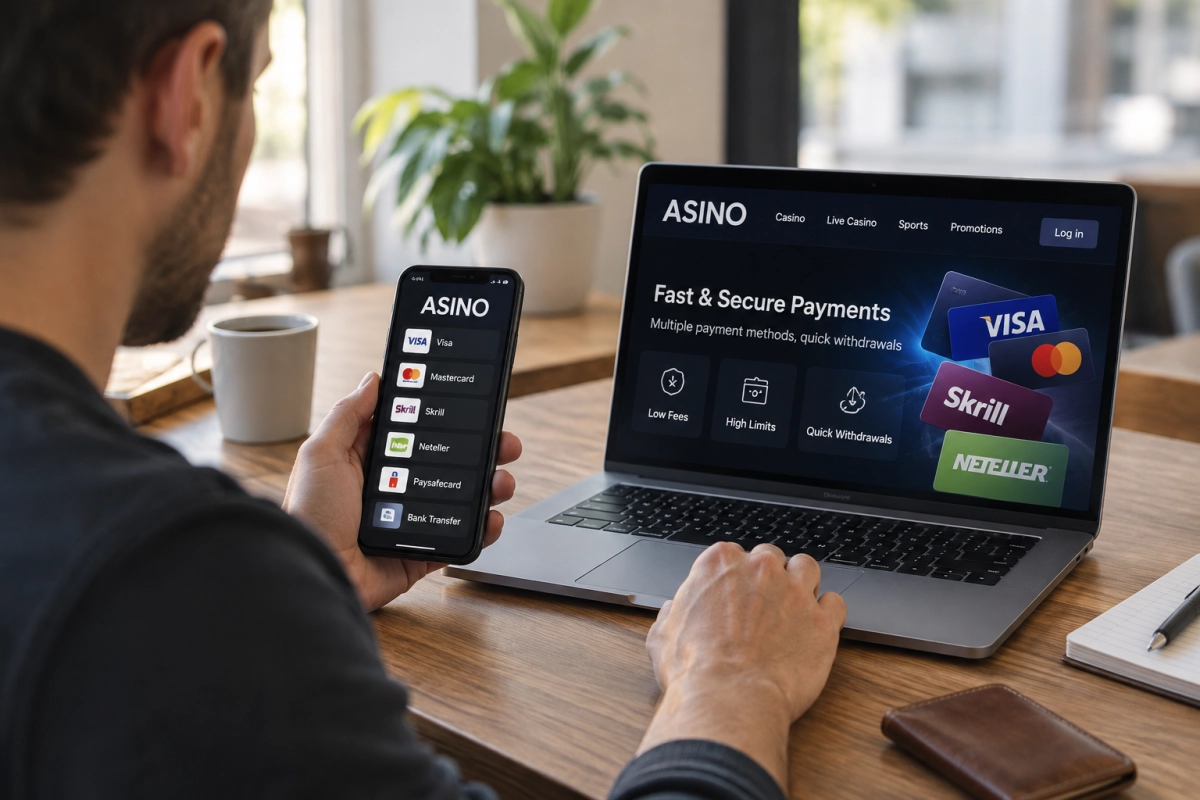
How Asino Payment Methods Compare for Casino Transactions
Choosing between the available Asino payment methods involves more than checking whether a deposit is accepted. Transaction fees, withdrawal limits, processing times, currency conversion, and identity checks can all affect the overall experience. This comparison explains the practical differences between cards, e-wallets, bank transfers, and cryptocurrency, helping adults aged 21 and over select an option that suits their priorities.
Available information lists 19 payment options, including Visa, Mastercard, Skrill, Neteller, PaysafeCard, bank transfer, Interac, and several cryptocurrencies. Availability can depend on the player’s country, account currency, and the cashier page displayed after login. A method shown for deposits may not necessarily be available for withdrawals, so the withdrawal options should be checked before funds are added.
Cards, e-wallets, bank transfers and cryptocurrency
Cards are familiar and generally convenient for deposits, although card withdrawals may not always be supported. E-wallets such as Skrill and Neteller can offer a faster route where available, but their own transaction or currency-conversion charges may apply. Bank transfers are suitable for larger withdrawals but typically take longer and may involve intermediary-bank costs. Cryptocurrency can provide flexible processing, but its value may change between the deposit, play, and withdrawal stages.
- Cards: convenient for everyday deposits, with availability and withdrawal rules varying by card issuer.
- E-wallets: often practical for faster account-to-account transfers, subject to wallet verification and fees.
- Bank transfers: useful for larger amounts, but slower and potentially affected by correspondent-bank charges.
- Cryptocurrency: may process efficiently, while network fees and exchange-rate volatility create additional considerations.
Deposit Fees, Minimums and Wagering Conditions
The published minimum deposit and fiat withdrawal amount is €20, or the equivalent in another supported currency. Maximum deposit and withdrawal amounts can vary by payment method, account status, country, and any limits imposed by the financial provider. Because these caps may be daily, weekly, or monthly, the cashier and applicable terms should be reviewed before a large transaction is attempted.
Asino may not charge a separate deposit fee for every option, but the payment provider, card issuer, cryptocurrency network, or currency conversion service can still add a cost. Bank-transfer intermediary fees may reach €16 according to the published terms. The total cost therefore includes both the casino’s stated charges and any external banking or network fees.
Deposits may also need to satisfy a three-times wagering requirement before a withdrawal can be requested. This condition is separate from any promotional bonus wagering requirement. A player should review the relevant terms, including maximum withdrawal amounts, payment-method restrictions, and currency conversion rules, rather than assuming that a deposited balance is immediately withdrawable.
Withdrawal Timing and Practical Planning
Withdrawals are targeted for processing within 72 hours after approval, while bank transfers are stated to be processed within three business days. These periods generally describe the operator’s processing stage and do not necessarily include the time required by a bank, e-wallet, or blockchain network. Verification requests can extend the overall timeline, particularly for a first withdrawal or an unusually large transaction.
The next part examines identity verification, supported currencies, payment security, and the checks that can influence withdrawal reliability.
Identity Verification Before Deposits and Withdrawals
Identity verification can affect both the speed and availability of Asino payment transactions. The operator may request documents such as a government-issued identity document, proof of address, or confirmation that a payment method belongs to the account holder. Additional information may be required when transaction activity is unusual, when a withdrawal is relatively large, or when responsible-gambling and anti-money-laundering checks are triggered.
Players should use payment methods registered in their own name and ensure that the personal details on the casino account match the information supplied during verification. A deposit made with another person’s card or wallet can create problems when funds are withdrawn, even if the deposit itself was accepted. Documents should be submitted only through the account’s secure verification or cashier area, rather than by sending sensitive information through an unverified contact channel.
Verification is not necessarily completed at registration. A casino can accept an initial deposit and request checks later, including before the first withdrawal. Completing the process early, where the account provides that option, may reduce delays when winnings need to be transferred.
Currency Support and the Cost of Conversion
Asino payment methods may support several account and transaction currencies, but the exact selection depends on the player’s location and the cashier settings. The account currency should be chosen carefully because changing it later may be restricted or may require support assistance. A payment provider can also process a transaction in a different currency from the casino balance, creating a conversion cost outside the operator’s listed fee.
Using the same currency for the bank account, wallet, and casino balance is generally the simplest way to limit avoidable conversion charges. Where this is not possible, the player should check whether the card issuer, e-wallet, bank, or cryptocurrency exchange applies its own exchange rate. For cryptocurrency, the value of the asset can move substantially while a transaction is pending, so the amount received may not correspond closely to the value originally deposited.
Exchange rates and displayed fees should be reviewed before confirmation. A payment that appears fee-free at the cashier can still cost more once a provider’s foreign-exchange margin, network charge, or intermediary deduction is included.
Security Checks When Selecting a Payment Method
Security depends on both Asino’s account controls and the protections provided by the selected financial service. Players should access the casino through the correct website, use a unique password, and enable two-factor authentication if it is available. Payment details should not be shared through chat, email, or social-media messages claiming to represent the operator.
Cards and e-wallets may offer dispute processes or account alerts, while bank transfers can provide a clear record but are usually harder to reverse once authorised. Cryptocurrency transactions are generally irreversible after confirmation, making the accuracy of the wallet address especially important. A small test transaction can be sensible when using a crypto method for the first time, provided the applicable minimums and fees make this practical.
Before approving a deposit or withdrawal, the player should confirm the recipient, currency, amount, and any network or provider charge. Transaction confirmations, screenshots, and bank or wallet records should be retained in case the payment needs to be traced. Unusual requests for extra payments to “unlock” a withdrawal should be treated cautiously and checked through official support channels.
Making the Final Payment Choice
The most suitable Asino payment method depends on the transaction being made, the amount involved, and the player’s tolerance for waiting, conversion costs, and verification requests. Checking the cashier details immediately before payment helps avoid relying on outdated assumptions about availability, limits, or processing times.
Players should make transactions in their own name, keep their account information accurate, and retain confirmation records. Taking a moment to review the final amount, currency, fees, and recipient details can prevent avoidable problems and make any later payment query easier to resolve. Payments should remain within a planned entertainment budget, and local eligibility and gambling regulations should always be observed.