
How to Evaluate Asino Payment Methods Before Depositing
Choosing between Asino payment methods involves more than selecting the fastest-looking option. Players should assess payment security, identity verification, privacy, deposit and withdrawal compatibility, transaction reliability, and any applicable limits or fees. This guide explains how to compare those factors so each player can choose a method that suits their location, budget, and preferred level of convenience.
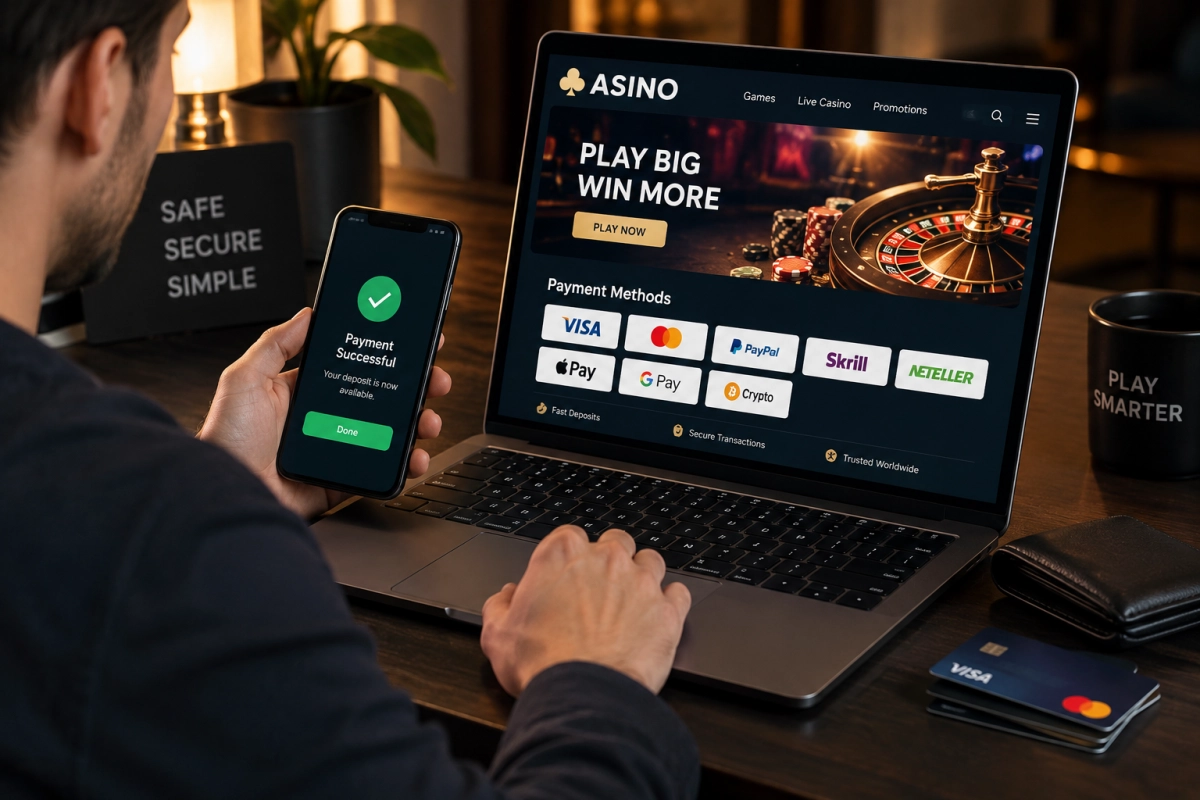
Available options may include Visa, Mastercard, e-wallets, bank transfers, and cryptocurrency-related services. However, the exact selection can vary by jurisdiction, currency, account status, and whether the transaction is a deposit or withdrawal. A method displayed at the cashier is not automatically available for every purpose, so the player should check the relevant terms before making a payment.
Start with the payment method’s practical fit
The most suitable option is usually one that supports both the player’s local currency and the intended transaction. Cards can be familiar and convenient for deposits, while e-wallets may offer a quicker way to move funds without sharing card details directly with the casino. Bank transfers can be useful for larger amounts but may take longer, and cryptocurrency payments can involve exchange-rate changes and additional wallet considerations.
- Check availability: Confirm that the method is offered in the player’s country and supports both deposits and withdrawals if required.
- Review limits: Compare minimum deposits, maximum transaction amounts, and any account-level restrictions.
- Consider fees: Check whether charges may come from the casino, payment provider, bank, currency conversion, or blockchain network.
- Compare processing times: Deposits are often handled differently from withdrawals, particularly when verification is required.
Security and Identity Verification for Asino Payments
Payment security should be considered before speed or convenience. Asino’s terms state that deposits must come from a payment account registered in the player’s own name. Third-party payments are prohibited, meaning a player should not use a relative’s card, another person’s e-wallet, or an account that cannot be linked clearly to the casino profile. Following this rule can help avoid delayed deposits, failed withdrawals, or additional account checks.
Identity verification, commonly called Know Your Customer or KYC, may be requested before withdrawals are processed or when activity triggers a compliance review. Documents can include a government-issued identity document, proof of address, and evidence that the selected payment method belongs to the player. Clear, valid documents usually make the review easier, although processing times can vary.
Protecting personal and financial information
Privacy should also form part of the comparison. A casino may process identity, financial, transaction, device, and location data for payment handling, regulatory compliance, and fraud prevention. Players should therefore review the privacy information and understand why data is collected, how it may be used, and whether additional verification could be required.
Practical safeguards include using strong, unique account credentials, enabling available security controls, avoiding public Wi-Fi for banking activity, and keeping payment confirmation records. Players should also avoid sending sensitive documents through unofficial channels. If a withdrawal remains pending, checking the cashier status and contacting official support is preferable to repeatedly submitting new transactions.
With security and verification understood, the next step is to compare how each option performs during deposits and withdrawals, including compatibility, reliability, and transaction timing.
Comparing Deposit and Withdrawal Compatibility
A payment method should be assessed separately for deposits and withdrawals because the available options may not be identical. Cards and some e-wallets can be convenient for adding funds, but a withdrawal may need to return to the same method or be completed through a bank transfer. Before depositing, players should open the cashier and confirm the complete transaction route rather than assuming that a method supporting deposits will also receive payouts.
Currency compatibility is equally important. Using a payment account in a different currency can introduce conversion charges or make the final amount less predictable. Cryptocurrency users should also check whether the casino supports the same asset and network as their wallet. Sending funds through an unsupported network can cause delays or, in some cases, permanent loss. A small test transaction may be sensible when the method is unfamiliar, provided it remains within the account’s limits.
- Match the account holder: The name and ownership details should correspond with the Asino account.
- Confirm withdrawal support: Check whether the method is available for payouts, not only deposits.
- Check currencies and networks: Review supported fiat currencies, cryptocurrencies, and blockchain networks.
- Understand limits: Make sure the minimum and maximum amounts suit the planned transaction.
Assessing Transaction Reliability and Processing Times
Reliability involves more than how quickly a deposit appears in the balance. A dependable method should provide clear confirmations, accurate status updates, and a practical process for resolving failed or delayed transactions. Players can review the cashier information for estimated processing times and then consider whether those estimates apply to deposits, withdrawals, or both.
Deposits are often credited quickly once approved by the payment provider, while withdrawals may take longer because of KYC checks, internal review, payment-provider handling, or banking schedules. A pending transaction should not automatically be treated as an error. The player should first check the account history, retain the transaction reference, and contact official support if the stated processing period has passed. Repeatedly cancelling and resubmitting a withdrawal can create confusion and may lead to further review.
Transaction records are useful when comparing providers. Players can note the date, amount, currency, fee, confirmation time, and final credited amount. This makes it easier to identify recurring conversion costs or delays and to decide whether a slower but more predictable method is preferable to a faster option with inconsistent results.
Choosing the Option That Matches Individual Priorities
There is no single best payment method for every player. Someone prioritising speed may prefer an established e-wallet, while a player focused on familiarity may choose a bank card. A bank transfer may suit larger planned transactions, whereas a cryptocurrency option may appeal to a user already comfortable with wallet security and price movements.
The decision should reflect the full cost and level of effort, including fees, limits, verification requirements, currency conversion, withdrawal availability, and expected timing. Players should also set personal transaction limits and avoid choosing a method solely because it appears at the top of the cashier. Comparing these details before depositing helps create a payment process that is secure, compatible, and manageable over time.
Making a Confident Payment Choice
A thoughtful payment decision can make the overall Asino experience more predictable and easier to manage. Players should take a moment to confirm the method’s current terms before committing funds, keep their account and payment details consistent, and use official support whenever an issue cannot be resolved through the cashier. Choosing an option that fits personal circumstances and comfort level is ultimately more valuable than selecting the fastest or most prominent method available.